
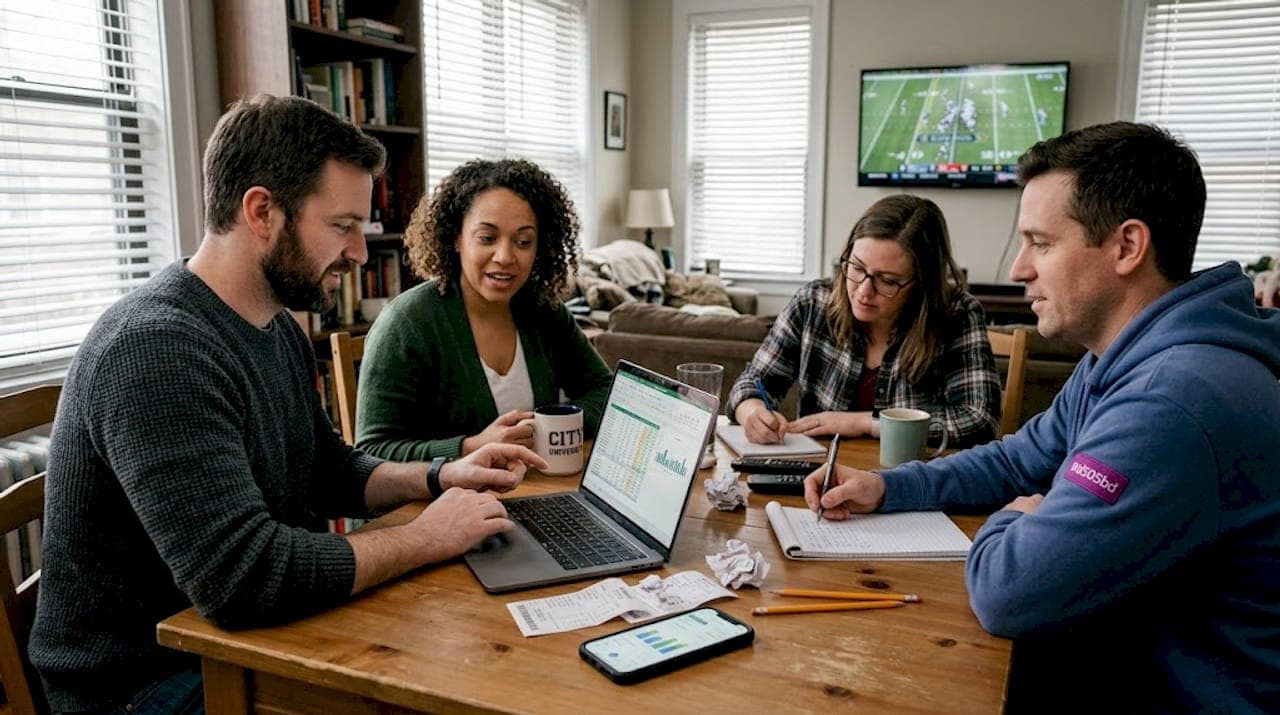
Flying solo in sports betting feels empowering until the losses stack up and you realize you've been making the same mistakes on repeat. No one to challenge your reasoning. No data archive to cross-reference. No accountability when emotions push you toward a bad bet. The reality is that most bettors who struggle long-term aren't losing because they lack knowledge. They're losing because they lack structure, feedback, and the right tools. This guide walks you through how joining a sports betting community, using AI-powered analysis, and tracking your results with discipline can shift your betting from guesswork to a repeatable, profitable process.
Table of Contents
- Why join a sports betting community?
- Essential tools and technologies for profitable betting
- Step-by-step: How to organize and track community bets
- Avoiding common mistakes and maximizing long-term profitability
- What most bettors get wrong about community strategies
- Join a winning sports betting community
- Frequently asked questions
Key Takeaways
| Point | Details |
|---|---|
| Community advantage | Joining a group of serious bettors leads to better strategy, support, and overall results. |
| Data-driven tools | Leveraging AI models, spreadsheets, and shared data helps improve profitability. |
| Clear bet tracking | Organized, transparent record keeping prevents disputes and promotes discipline. |
| Avoid common pitfalls | Overconfidence and poor discipline are bigger threats than poor picks. |
Why join a sports betting community?
Solo betting puts every decision entirely on your shoulders. You're responsible for research, line shopping, bankroll management, and emotional control, all at once. That's a lot of cognitive load, and it creates blind spots. A well-run sports betting community distributes that load across people with different strengths.
Here's what a quality community actually brings to the table:
- Crowd-sourced analysis: Multiple bettors studying the same game from different angles catch things one person would miss. One member might specialize in player prop trends while another focuses on weather impact on totals.
- Strategy archives: Established communities maintain records of past picks, reasoning, and outcomes. You can review what worked, what failed, and why, without starting from scratch.
- Emotional checks: When you're tempted to chase a loss or go heavy after a big win, community members who've been there can talk you down. Tilt (the emotional state where bettors make irrational decisions after losses) is one of the biggest profit killers in betting.
- Shared data feeds: Many communities pool subscriptions to premium data sources, giving members access to tools they couldn't afford individually.
- Accountability: Posting your picks publicly within a group means you think twice before making impulsive bets.
"Collaborating with other bettors helps reduce individual bias and improves strategy outcomes."
The accountability factor alone is worth the price of admission. When you know your picks are being reviewed by peers who care about results, your decision-making process tightens up. You start documenting your reasoning, not just your picks. That habit alone separates recreational bettors from serious ones.
The best communities aren't just group chats full of hot takes. They function more like an elite sports betting community where members contribute meaningfully, share data responsibly, and hold each other to a consistent standard. If you're not in an environment like that, you're leaving real edge on the table.
Essential tools and technologies for profitable betting
With the benefits of community in mind, equipping yourself with the right tools is the next step. The gap between a bettor who breaks even and one who profits consistently often comes down to how systematically they use data.
Spreadsheets are still the backbone of serious bet tracking. A well-built spreadsheet logs every bet with date, sport, market, odds, stake, outcome, and profit or loss. Over time, this data reveals patterns. Maybe you're profitable on NFL spreads but bleeding on NBA totals. Without a log, you'd never know.
AI prediction models have changed the game significantly. These systems process thousands of data points, including team form, injury reports, historical matchups, line movement, and public betting percentages, to surface value bets before the market adjusts. As AI betting models become more accessible, communities that adopt them early gain a measurable edge.

Odds trackers and line movement tools show you how lines shift from open to close. Sharp money (bets placed by professional bettors) moves lines in predictable ways. Tracking that movement helps you decide whether to bet early or wait.
| Tool | Primary use | Best for |
|---|---|---|
| Spreadsheet tracker | Logging and reviewing bets | All bettors |
| AI prediction model | Identifying value bets | Intermediate to advanced |
| Odds tracker | Monitoring line movement | Value hunters |
| Discord or Slack | Community communication | Group coordination |
| Bankroll calculator | Sizing bets correctly | Bankroll management |
Pro Tip: Don't just track wins and losses. Track your closing line value (CLV), which measures whether you beat the closing odds. Positive CLV over time is the strongest indicator that your process is sound, even during a losing streak.
Communities accelerate tool adoption because members share custom scripts, alert setups, and data integrations that would take an individual months to build alone. Data-driven tools and AI-powered tips increase odds of long-term profitability when consistently applied with discipline. The keyword there is consistently. Tools only work when you actually use them every single time.
Step-by-step: How to organize and track community bets
After you choose your tools, it's crucial to understand exactly how to organize betting as a group. Without structure, even a talented group of bettors will drift into chaos, disagreements, and uneven contributions.
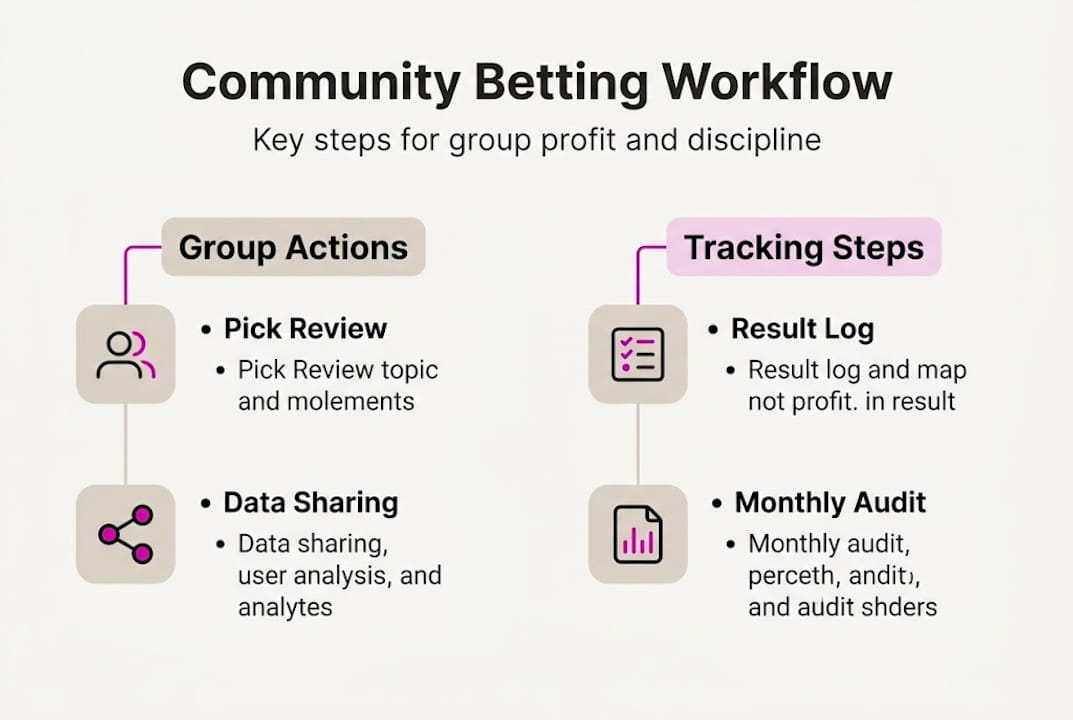
Here's a practical framework for running a community betting operation:
- Set ground rules upfront. Define contribution limits, how picks are submitted, how disputes are resolved, and what happens when someone goes rogue with the bankroll. Written rules prevent 90% of future arguments.
- Assign clear roles. Every effective group has distinct responsibilities. Analysts break down matchups and identify value. Bankroll managers track the collective fund and enforce staking rules. Tipsters submit picks with documented reasoning.
- Use a shared tracking platform. Whether it's a Google Sheet or a dedicated betting tracker app, every bet needs to be logged in real time with full transparency. No private side bets. No undocumented plays.
- Hold regular performance reviews. Weekly or monthly, sit down as a group and go through results. What worked? What didn't? Which analyst's picks are generating the most value? This feedback loop is what separates improving groups from stagnant ones.
- Automate where possible. Manual tracking works, but automated systems that pull in odds data and calculate ROI (return on investment) in real time reduce errors and save time.
| Approach | Pros | Cons |
|---|---|---|
| Manual spreadsheet | Full control, customizable | Time-consuming, error-prone |
| Automated tracker | Real-time data, accurate | Setup cost, learning curve |
| Dedicated platform | Built-in features, easy to share | Subscription cost |
Transparent tracking systems prevent disputes and increase group trust. That trust is what keeps a community functioning when results go through a rough patch, and every group will hit a rough patch eventually. The ones that survive it are the ones with airtight records and honest communication.
When tracking collective bets, make sure every entry includes the reasoning behind the pick, not just the outcome. Outcome-only tracking teaches you nothing. Process tracking teaches you everything.
Avoiding common mistakes and maximizing long-term profitability
Once you're up and running as a group, beware of obstacles that can sabotage even experienced bettors. The mistakes that hurt communities most aren't about picking losers. They're about process failures.
Emotional pitfalls hit groups just as hard as individuals. Chasing losses as a group is especially dangerous because the social pressure to "get it back" can override individual judgment. Overconfidence after a hot streak leads to oversized bets that wipe out weeks of gains.
Common group-level mistakes to watch for:
- Risk stacking: Multiple members betting the same game in different markets creates overlapping exposure. If that game goes wrong, the group takes a compounded hit.
- Ignoring bankroll rules: Even one member who bets outside agreed limits can destabilize the whole group's fund.
- Skipping audits: Groups that don't review results regularly lose sight of which strategies are actually working.
- Echo chambers: If everyone agrees on every pick, no one is challenging the analysis. Healthy disagreement improves outcomes.
Pro Tip: Schedule a mandatory monthly audit where every pick from the previous month is reviewed with fresh eyes. This isn't about blame. It's about identifying patterns that are invisible in the day-to-day grind.
The data is clear: betting discipline and emotional control are more important than picking winners for long-term gains. A bettor with average picks and iron discipline will outperform a sharp handicapper who bets emotionally. In a group setting, that discipline needs to be structural, built into your rules and review processes, not just hoped for.
Regular results audits also protect against a quieter threat: overreliance on one analyst or tipster. If one person's picks drive 80% of your group's action and that person has a bad month, you're exposed. Diversify your analysis sources the same way you'd diversify a financial portfolio.
What most bettors get wrong about community strategies
Here's the uncomfortable truth: most betting communities fail not because of bad picks, but because they treat picks as the product. They obsess over win rates and ignore everything that actually drives sustainable profit.
The real engine of a successful group isn't the tipster with the hottest streak. It's the accountability system that forces every member to document their reasoning, review their mistakes, and improve their process over time. Without that, you're just pooling ignorance at scale.
We've seen groups with genuinely sharp analysts fall apart because no one wanted to have honest performance conversations. And we've seen groups with average analysts build consistent profit because they committed to long-term betting accountability and treated every losing stretch as a learning opportunity.
The shift happens when a community stops asking "who has the best picks this week" and starts asking "what does our data tell us about our process over the last six months." That's the question that separates bettors who grind out real profit from those who just get lucky in cycles.
Join a winning sports betting community
If the strategies in this guide resonate with you, the next logical step is finding a community that actually operates this way. Not one that floods you with picks and hype, but one built on data, accountability, and long-term thinking.

The NYX PICKZ sports betting community gives serious bettors access to AI-powered analysis, transparent result tracking, and a Discord community of members who are focused on process, not just outcomes. You get daily curated picks, live odds tools, and the kind of peer feedback that actually sharpens your edge. Weekly and monthly plans are available, so you can start at whatever level fits your goals. If you're ready to bet smarter, not just harder, this is where that shift begins.
Frequently asked questions
What is a sports betting community?
A sports betting community is a group of bettors who collaborate, share data, and hold each other accountable to improve profits and sharpen strategy. Collaborating with other bettors reduces individual bias and leads to better outcomes over time.
How do AI tools help with sports betting?
AI tools process massive datasets to surface value bets before the market adjusts, giving disciplined bettors a measurable edge. Data-driven tools and AI-powered tips consistently applied with discipline increase your odds of long-term profitability.
What roles exist in a betting community?
Most effective groups include analysts who break down matchups, bankroll managers who control the collective fund, and tipsters who submit picks with documented reasoning. Assigning clear roles improves group outcomes and keeps everyone accountable within the group.
Can I track my results when betting in a community?
Yes, shared spreadsheets or dedicated tracking platforms let every member view all bets, stakes, and outcomes in real time. Transparent tracking systems prevent disputes and build the trust that keeps a community functioning through losing stretches.